
Maintaining Testosterone in Aging Men for Vitality
What is Testosterone?
In layman’s terms, testosterone is the male sex hormone. It plays an important part in producing
sperm and maintaining a person’s sex drive. It also plays a part in storing fat efficiently, and in
helping men gain muscle mass. It is also found in women in much lower quantities. It is primarily
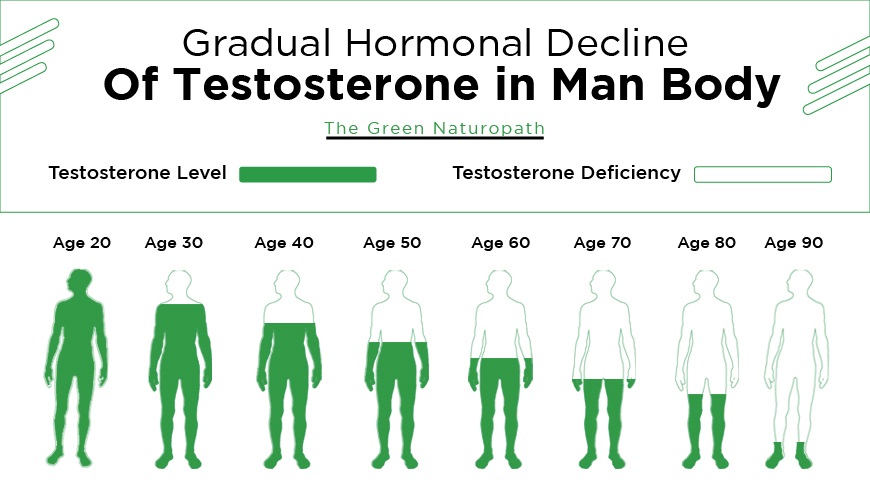
produced in the testicles. Testosterone begins producing when puberty starts and the
production tends to lower when the man reaches his thirties.
Many men fix their daily schedules and begin focusing on their health as they age to maintain
their testosterone levels. Certain undesirable symptoms come to light as testosterone levels
decrease if they are not maintained:
What Happens If We Don’t Maintain Testosterone as We Age?
The following are the symptoms of low testosterone levels:
Sex Drive is Lowered
Men with low testosterone in their bodies will often express a decline in their desire to have sex.
This is because testosterone levels stimulate the person’s sex drive and as the testosterone is
lowered, so is the drive to have sex.
Difficulty Maintaining Erections
Perhaps, another reason why men with low testosterone do not want to have sex is that they
have difficulty maintaining erections.
Testosterone can stimulate a series of chemical reactions
in the brain and the body that lead to a person having an erection. As this person’s testosterone
levels drop down, the stimulation itself of the erections is halted.
Hair Loss
We have all heard of male pattern baldness and we all know a lot of men who begin to lose their
hair as they turn thirty, and sometimes even in their late twenties. Well, the reason for this hair
loss is also the decrease in testosterone levels inside the body! While baldness in men often
occurs due to hereditary reasons as well, a drop in testosterone levels can certainly accelerate
the process.
Fatigue
Testosterone levels in the body are also directly correlated with the energy levels of a person.
As men age and their testosterone levels go into decline, they begin to get tired more easily.
This is especially true if the person did not do anything to work on their strength when they were
younger.
Increase in Body Fat
The dreaded potbellies we all fear as we age too are symptoms of lowered testosterone levels.
Testosterone plays a vital role in converting fat into muscle and as the testosterone levels of a
person go into decline, they often begin losing muscle mass as well. Naturally, as muscle
mass is lost, the person begins to accumulate fat in their upper arms, back, and stomach. This
increase in body fat can be sudden and often works to shatter the confidence of the man.
Mood Swings
Men with lowered testosterone often experience more negative emotions than men with a good
amount of testosterone. The physical changes that the body undergoes can contribute to it
along with the fatigue that the person experiences. When people do not work on maintaining
their testosterone, they often become depressed as well.
How Can We Maintain Testosterone Levels as We Age?
The good news is that the decline in testosterone is not permanent. People can maintain their
testosterone levels and even increase them as they age if they just take care of themselves the
right way. For example:
Strength Training
Lifting weights is perhaps the best way for a man to work on maintaining his testosterone
levels. You should also try to get your heart rate up by doing cardio exercises since they help
you shed excess fat. Along with that, lifting weights can help in converting the extra fat stores
inside the body to muscle mass. It is a good idea to build a habit of regularly exercising from an
early age since it will be much easier to continue this habit well into your thirties than starting
anew when you are older.
Take in a Proper Diet
Make sure you are taking in a healthy amount of all food groups in your diet. To maintain
muscle mass and keep testosterone levels up, you need to eat proteins. But eating protein
alone can hinder the normal functions of your body so you must balance it out with healthy fats
and carbohydrates as well. Make sure you take in the recommended amount of calories per
day which is 2500 calories for the average man. Taking in more calories can also lead to
obesity.
Vitamin Intake
The single most important vitamin that can help you with maintaining your testosterone is
Vitamin D. You can find it in foods such as fish and spinach. Activating Vitamin D requires
exposure to sunlight. Other than that, you need to maintain levels of zinc and magnesium to prevent testosterone
levels from dropping down as well.
Sleep Properly
Testosterone levels can also drop in men who do not get enough sleep in a day. In fact, a single
week of insufficient sleep can lead to a 15% drop in testosterone levels. So make sure you
catch your Zs every night, especially after you have turned 30, to prevent testosterone
deficiency from kicking in.
References
1. Nieschlag E, Behre HM, Nieschlag S, editors. Testosterone: action, deficiency, substitution.
Cambridge University Press; 2012 Jul 26.
2. Tenover JL. Testosterone and the aging male. Journal of Andrology. 1997 Mar 4;18(2):103-6.
3. Brock G, Heiselman D, Maggi M, Kim SW, Rodríguez Vallejo JM, Behre HM, McGettigan J,
Dowsett SA, Hayes RP, Knorr J, Ni X. Effect of testosterone solution 2% on testosterone
concentration, sex drive and energy in hypogonadal men: results of a placebo controlled study.
The Journal of urology. 2016 Mar;195(3):699-705.
4. Tsujimura A, Matsumiya K, Matsuoka Y, Takahashi T, Koga M, Iwasa A, Takeyama M, Okuyama
A. Bioavailable testosterone with age and erectile dysfunction. The Journal of urology. 2003
Dec;170(6):2345-7.
5. Whiting DA. Male pattern hair loss: current understanding. International journal of dermatology.
1998 Aug 1;37(8):561-6.
6. Traish AM, Miner MM, Morgentaler A, Zitzmann M. Testosterone deficiency. The American
journal of medicine. 2011 Jul 1;124(7):578-87.
7. Schwab RO, Johnson GO, Housh TJ, Kinder JE, Weir JP. Acute effects of different intensities of
weight lifting on serum testosterone. Medicine and science in sports and exercise. 1993 Dec
1;25(12):1381-5.
8. Jayaraman A, Lent-Schochet D, Pike CJ. Diet-induced obesity and low testosterone increase
neuroinflammation and impair neural function. Journal of neuroinflammation. 2014 Dec;11(1):1-4.
9. Leproult R, Van Cauter E. Effect of 1 week of sleep restriction on testosterone levels in young
healthy men. Jama. 2011 Jun 1;305(21):2173-4